Fence boards & posts — in stock, ready for pickup or delivery.
Built to Last
Cedar lumber is durable and naturally rot resistant, making it perfect for low-to-the-ground fences.
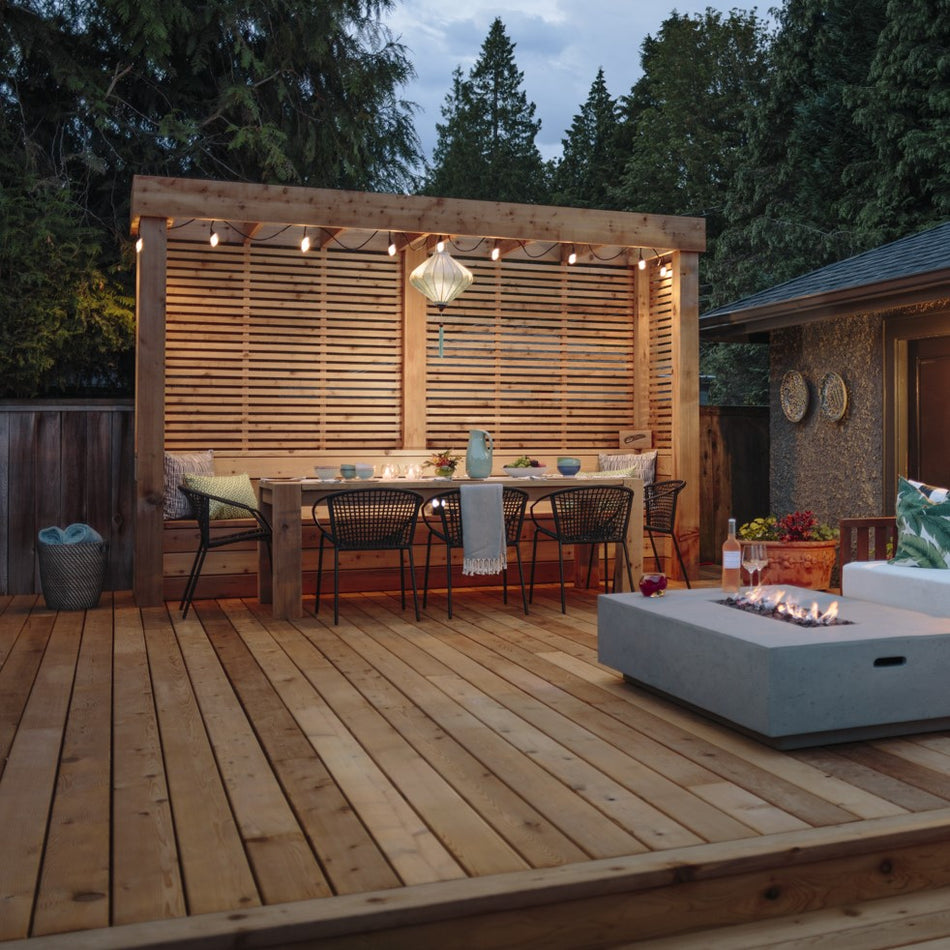
A solid board fence offers privacy and protection, while lattice panels let sunshine into shady areas.
Customize your fence’s look with a choice of metal or wooden fence caps. It’s time for a fence that’s built to last – your neighbours will thank you!
Why Choose Cedar For Your Fence?
Nothing compares to the look and longevity of a beautiful cedar fence.
Its natural resistance to decay and insects ensures that your investment will stand strong for years, while its warm tones and rich texture add a touch of elegance to any property.
Plus, cedar fencing is eco-friendly, making it a sustainable choice that enhances your outdoor space while being gentle on the earth.
Fence With Cedar Shoppe
We've been supplying Ontario contractors and homeowners with cedar fencing since 1986.
All our cedar is kiln dried and checked for grade before it leaves our yard, you're getting quality materials for your project.
Wherever your fence line runs, we're here to help you get it right the first time.
Frequently Asked Fencing Questions
Fence height and permits are set by your municipality, not the province — so the answer really is "it depends on where you live."
Most Ontario cities don't require a permit for a standard backyard fence as long as it stays under their height limit, which commonly sits around 6 to 6.5 feet in the backyard and lower in the front yard, closer to 3 to 4 feet.
Pool fencing is the one place the province steps in directly — Ontario's Building Code sets a minimum height for pool enclosures, with self-closing, self-latching gates required.
Before you build, a quick call to your local building department will confirm your exact height limit and any setback rules for your property.
It does, mostly in how the wood behaves over time.
Pressure-treated lumber is treated with preservatives to resist rot, and it's often the more budget-friendly option.
Cedar has natural oils that give it built-in resistance to rot and insects without chemical treatment, plus it holds up well without warping or twisting as it ages.
Both hold up fine as fence posts — it really comes down to whether you want a natural material that ages gracefully, or the lower up-front cost of treated lumber.
One thing worth knowing if you're comparing cedar prices: big box cedar is often sold "green," meaning it hasn't been properly dried, which is part of why it's cheaper. That's also why customers end up sorting through a stack to find boards that aren't warped or cracked.
All cedar stocked at Cedar Shoppe is kiln dried and checked prior to leaving the warehouse - we stand behind our product.
For general planning: wood fence posts are typically spaced 6 to 8 feet apart, with cedar often on the tighter end of that range (around 6–7 feet) since it's a bit lighter than pressure-treated lumber.
At Cedar Shoppe, we would be happy to review your plans with you and provide an estimate for the required lumber.
Cedar fencing doesn't have to be stained, but a finish extends its life and keeps the colour from greying out.
With a product like Sansin, most exterior applications need a maintenance coat every 1 to 4 years, depending on sun exposure, weather, and how the wood was prepped initially.
Fences typically fall on the more frequent end of that range since they get full sun and weather exposure on both sides.